In the dynamic world of design, few creations encapsulate the harmony between form and function as elegantly as the Noguchi Table. Designed by the internationally celebrated artist and designer Isamu Noguchi, this unique coffee table has become an iconic symbol of the mid-20th century modernist style.

(photo from Herman Miller's website)
Noguchi, a prominent figure in the world of art and design, sought to create pieces that blurred the line between fine art and functional design. The Noguchi Table, introduced by Herman Miller in 1947, truly exemplifies this ethos. The table features a simple yet compelling design - a curved, wooden base composed of two interlocking pieces, topped with a heavy, tempered glass top. This balance of artistic sculpture and practical utility has made it a timeless classic, admired and sought after by design enthusiasts globally.

(photo from Herman Miller's website)
The table's wooden base, often crafted from the fine-grained hardwood of the walnut tree, brings a unique element to the design. Walnut wood, known for its deep, rich color and complex grain patterns, exudes a certain elegance and sophistication unmatched by other woods. Its hues range from light pale brown to a dark chocolate brown, often with streaks of darker, intricate patterns that reflect the history of the tree.
Walnut trees, however, aren't just symbols of elegance. Their hard shells protect their fruits, and the expanse of their canopy creates a safe haven beneath. These nurturing aspects are mirrored in the Noguchi Table, adding a layer of warmth and comfort. In the interplay of stability and elegance, the walnut crafted Noguchi Table makes a space feel welcoming, fostering a nurturing environment akin to the protective shelter of a walnut tree. But what do we know about the walnut tree itself, beyond its contribution to elegant furniture design?
The Walnut Tree
When we encounter walnut trees in our day-to-day lives, nestled in our gardens, standing tall in parks, or gracing our homes in the form of furniture, we might be inclined to see them as "domesticated" entities. However, they have an expansive family tree thriving in the wild, undomesticated realms of the world. The walnut family, Juglandaceae, hosts a diverse collection of 60 to 70 known species, most of which continue to flourish in their natural habitats, untouched by the influences of cultivation. The two primary species that have woven themselves into the human narrative are the Juglans regia, the English walnut, and Juglans nigra, the Black walnut.

The English walnut, native to the diverse mixed forests stretching from the Balkans to the Himalayas and southwestern China, is believed to have been tamed by humans over 9,000 years ago in what is now Iran's Zagros Mountains. Since then, it has expanded its reach, being cultivated across a variety of regions, including the United States, China, Iran, and Turkey, offering us its high-quality wood and delectable nuts.
The Black walnut, native to the mixed forests of Eastern North America, is valued similarly for its rich timber and flavorful nuts. Despite this, it hasn't seen as extensive a domestication as the English walnut, retaining more of its wild roots.
No matter their origin, walnut trees are highly appreciated throughout the world for their dual offerings: quality wood for artisans and rich, nutritious nuts for many creatures, including humans. Reaching a height of 40 to 60 feet on average, with a canopy nearly as wide, they stand as an embodiment of elegance and nurturing.
Despite starting life from walnuts not unlike those found in grocery stores, the typical lifespan of a walnut tree is around 150 years, with some specimens known to have lived up to 400 years. Their growth journey starts with a small, hard-shelled nut and progresses steadily, with the tree reaching its full size in approximately 30 years.
Walnut trees exhibit a unique set of characteristics that make them stand out from other trees. Each species has its own distinguishing features, yet they all share certain qualities that link them together in the walnut family.

The leaves of a walnut tree are one of its most recognizable attributes. They are compound leaves, usually composed of 5 to 9, or even up to 23 leaflets, arranged in a feather-like pattern along a central stem. These leaflets are lance-shaped, often with a pointed tip and smooth edges. The overall leaf is typically about 1 to 2 feet long, contributing to the canopy's lush, feathered appearance.
Walnut bark is another noteworthy feature. The bark of young walnut trees is often smooth and greenish-brown, but as the tree matures, the bark becomes deeply furrowed, forming a rugged texture that's grey to dark brown. The English walnut typically has a lighter grey bark, while the Black walnut, true to its name, boasts a dark, deeply grooved bark.

The walnut's fruit, or more specifically, the nut, is perhaps the most familiar aspect of the tree. The nut is encased in a green, semi-fleshy husk. This husk, which is easy to stain with and has a strong, distinctive smell, splits open in the fall when the nut is ripe, revealing the familiar hard, wrinkled walnut shell. The nuts themselves are known for their rich, buttery flavor and are a prized addition to numerous culinary creations. They're also packed with beneficial nutrients, making them a valuable part of a healthy diet.
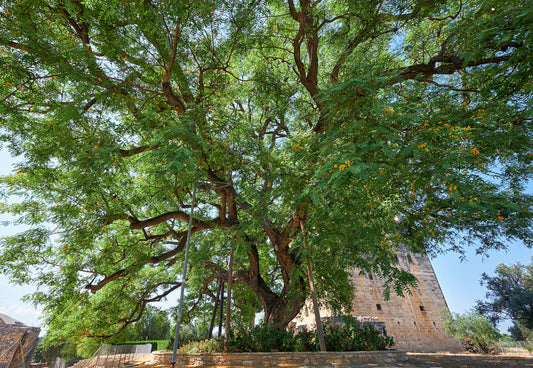
The appearance of the walnut tree itself is a beautiful mix of grace and ruggedness. Its form is pleasing to the eye, with a rounded, spreading crown. The trunk is often massive and straight, leading up to branches that weave an intricate network of beauty and complexity against the sky.
When it comes to functional attributes, walnut wood is strong, yet also somewhat easy to work with compared to some other hardwoods, making it possible to execute very detailed work with it. Its grain is generally straight, but it can also exhibit a wavy or curly grain, adding to its visual appeal. Walnut wood is also fairly resistant to decay and damage from insects, adding to its durability. It has a rich, dark color that changes depending on species, age, and various environmental factors. Furthermore, walnut wood finishes beautifully, enhancing its natural grain and color, and is receptive to a range of finishes, from oils to varnishes, that further highlight its elegance. All these features make it an excellent choice for a variety of woodworking projects, including finely crafted furniture like the Noguchi Table.
Moreover, walnut wood is also resilient against decay and insects, primarily due to the presence of natural compounds in the wood that deter pests. Its sturdy yet workable characteristics make it a favored material for craftsmen and designers.
And like most trees, it gets even more impressive when explored in its natural ecological context: a forest.
Article by: Andrei Mihail, see more about the author here